The Case of Kayseri at Hipódromo Camarero: One Horse’s Story in a System of 1,500 Deaths

Chrissy Laughlin
The Case of Kayseri at Hipódromo Camarero: One Horse’s Story in a System of 1,500 Deaths
7:23
The Horse Was Already Lame. They Raced Her Anyway
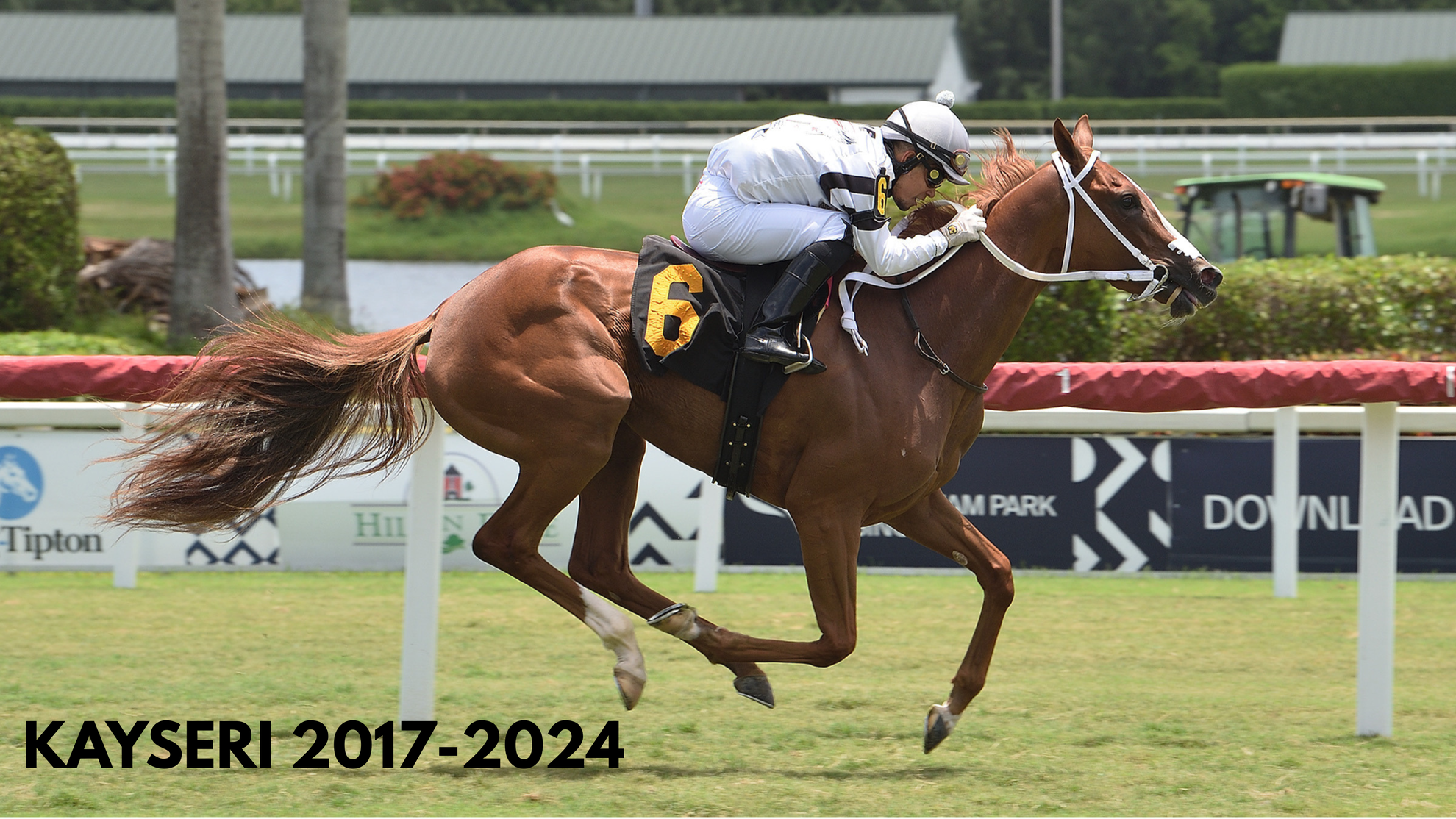
Her name was Kayseri. She was a Thoroughbred mare, bred by the University of Kentucky, and she deserved rest. Instead, she was raced 49 times in 41 months — repeatedly entered into competition while suffering from documented lameness — and euthanized on January 10, 2025, under circumstances that remain unexplained.
I tried to save her. The Puerto Rico Government Gaming Commission knew I was trying. I told them in writing, months before she died.
On July 5, 2024, I sent the Commission a detailed email flagging Kayseri's deteriorating condition, a recent DNF, and her punishing race schedule. I offered her a retirement home. I copied faculty at the University of Kentucky. The Commission's response was a form email assuring me she was "racing ready" — along with a video that, to anyone paying attention, showed the horse visibly lame in the same limb for which she was later euthanized. They never responded to my follow-up.
Six months later, she was dead. She had raced her final race on the very day she was removed from the Veterinarian's List — a list that exists precisely to prevent injured horses from competing.
Kayseri's case isn't an isolated tragedy. Over a five-year period, more than 1,500 racehorses were euthanized in Puerto Rico's racing system. That number isn't here to generalize. It's here because when the same outcome repeats at scale, it stops looking like a singular failure.
I Filed a Complaint. Then Another. Then Another.
I filed a formal complaint through the Commission's own administrative forum. Then a second. Then a third. I have spent nearly a year inside this proceeding —
And what I've encountered isn't a path toward accountability.
It's a case study in how institutions exhaust the people asking questions.
Here's what that looks like in practice:
Minutes from one hearing arrived 69 days after it took place. Documents I submitted through the Commission's own email system never arrived — because, I was later told, the system "was not functioning properly." When I moved for a default judgment against a defendant who had twice claimed to be "outside Puerto Rico with limited internet access," the Forum refused it. When defendants filed motions late, those were accepted without comment. When I filed on time, I was told my deadlines were "peremptory."
Not a single defendant ever responded to my discovery requests.
The Discovery Ruling: Blocking the Evidence
In September 2025, the Forum authorized discovery — the basic legal right to obtain documents relevant to my case. My requests were deliberately narrow: only documents related to Kayseri, only from 2021 to 2025, only from the parties involved, and tied specifically to documented regulatory obligations. I asked for basic things: What tests were performed on this horse? What medications was she given? Why was no necropsy ordered after she died? Why was the veterinarian who euthanized her not licensed to administer those drugs?
The Commission's response was to file a motion — late, past its own deadline — asking the Forum to limit discovery to documents the Commission itself had pre-selected. The other defendants opposed discovery entirely, citing a dissenting opinion and offering no supporting case law.
While my discovery requests sat unanswered for six months, the Forum ordered me to produce a Preliminary Expert Report — requiring me to reveal my case to the defendants while they revealed nothing. I complied. They used it. My requests were then denied in their entirety.
The ruling came down on March 18, 2026. It was served on me April 8 — twenty days before the trial it had already scheduled. It declared that Kayseri's medical records are confidential and cannot be shared with "a third party who does not even hold a license issued by the Commission."
I am that third party. The Commission's own Order OACJ-NH-23-21 — the very order under which I filed this complaint — explicitly states that any person with firsthand knowledge of a racehorse in poor condition may bring a case. The Commission created this right. It is now using confidentiality rules to ensure it can never be used successfully.
Why This Matters Beyond One Horse
I'm not seeking money. I'm not filing a civil lawsuit. I filed through the Commission's own system, asking for license suspensions, fines, and stronger enforcement of rules that already exist. I retained an expert witness at my own expense. My witness and I both require an interpreter. We are being asked to show up to trial having been denied the right to prepare.
The Commission's own regulations acknowledge that racing's integrity depends on transparency. Bettors place money on races on the assumption that horses are fit to compete and the process is honest. Kayseri was on the Veterinarian's List and raced anyway. If the public cannot know what happened to her, that list is meaningless.
Courts in New York, Ohio, and the D.C. Circuit have permitted disclosure of equine medical records in similar proceedings. The claim that these records are simply off-limits isn't supported by precedent. It's supported by the convenience of the institutions whose conduct is under investigation.
What I'm Asking For
On April 16, 2026, I filed an urgent motion asking the Commission's Board of Commissioners to review the discovery ruling, suspend the trial scheduled for April 28–29, and order a proper hearing on discovery before any trial on the merits proceeds.
I am asking for a fair process.
If a regulatory agency can create a right to bring a complaint, delay the proceeding for nearly a year, deny the complainant access to evidence held by the defendants, require the complainant to disclose her expert's findings to the other side, and then schedule a trial anyway — that right is theater. It exists to absorb outrage, not address it.
Kayseri deserved better. The horses racing at Camarero right now deserve better. And the people of Puerto Rico — who fund, bet on, and care about this industry — deserve a system that actually works.
Case No. NH-25-44 — Puerto Rico Government Gaming Commission Board of Commissioners Counsel of record: Amanda Collazo Maguire, RUA 19316
###